
What Is Gut Health, Really? (And Why Your Probiotic Might Be Wasting Its Time)
If someone asked you to explain gut health in a sentence, could you? Most people can't, and a lot of them are spending good money on it anyway.
When your gut is working well, you notice it in all sorts of places: steadier energy, better moods, clearer skin, digestion you don't have to think about, and fewer of the colds doing the rounds at work. That's really all gut health means. A body that's running the way it should.
So what's actually going on down there?
Your gut is home to trillions of bacteria. Some are helpful and some are less so. The helpful ones get on with a lot of unglamorous work: they help you absorb nutrients, they support your immune system, and they play a part in the chemistry behind your mood and energy. When that community is doing well, you feel it. When it isn't, you feel that too, often as bloating, tiredness, sugar cravings or skin that flares up for no obvious reason.
So when I talk about a happy gut, I mean a digestive system where a thriving community of good bacteria breaks down your food, helps you absorb the nutrients from it and moves the waste along. Of everything that keeps that system running, fibre plays the biggest role.
The probiotic mistake almost everyone makes
A lot of people take a probiotic and leave it at that. But taking a probiotic without feeding it is like planting seeds in dry soil.
The probiotic is the seed: live bacteria you're adding to your gut. The soil is prebiotic fibre, the particular kinds of fibre your gut bacteria can ferment and live on. Without it, those bacteria struggle to settle in and multiply, and plenty of them simply pass straight through without staying long enough to do much good.
It's worth being precise here, because not all fibre feeds your bacteria. The kinds that do are called prebiotics. They're what your existing gut bacteria, and any new ones you add, actually live on, and legumes are one of the best sources you can eat. A probiotic you're not feeding is an expensive way to change nothing.

So why isn't everyone just eating more fibre?
Mostly because the best high-fibre foods have a bit of a reputation. Beans and lentils are some of the richest sources of fibre there are, but plenty of people steer clear of them because, in their experience, healthy and gassy tend to arrive together.
That's the problem I built my business around. My own interest in gut health came together with two things: the growth of plant-based eating, and a lifetime of traditional Indian home cooking, where legumes are the heart of the meal rather than a side. The techniques that make those meals easy to digest, like soaking and sprouting legumes before they're cooked, aren't new. They just aren't well known outside that tradition. And they fix the thing that stops most people eating enough fibre in the first place, which is how it feels afterwards. Properly activated legumes let your body get at their fibre and nutrients far more easily, without the bloated, heavy feeling that puts so many people off beans.
The takeaway
You can't buy gut health in a capsule. It's an ecosystem, and you have to feed it. If you've been taking a probiotic and haven't noticed much difference, the first thing I'd look at is how much prebiotic fibre you're eating.
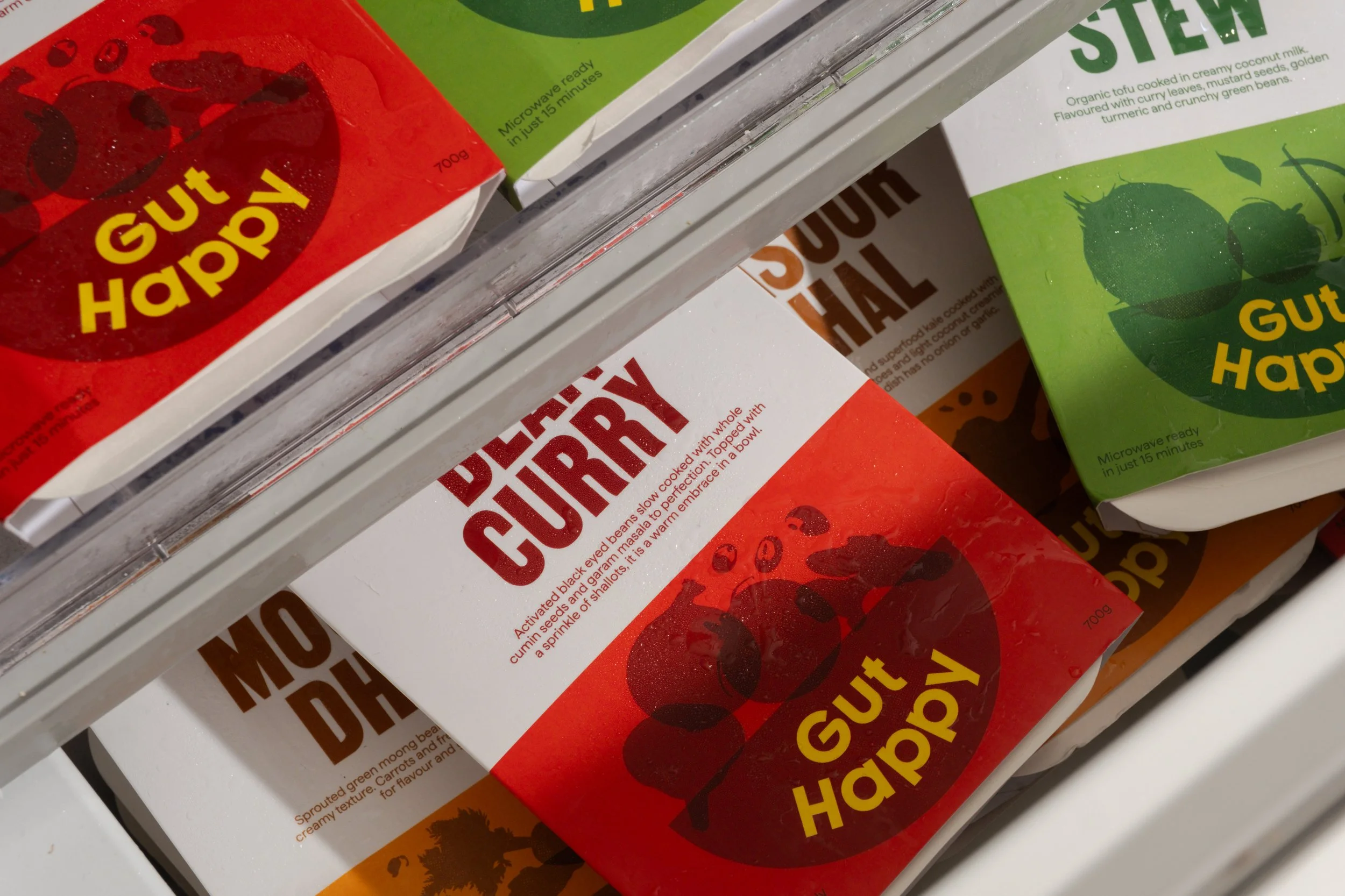
That's the thinking behind everything we make at Gut Happy Foods: sprouted, activated legumes and organic tofu, cooked the way they've been cooked in Indian homes for generations, so your gut gets the fibre it needs without the fuss or the bloating.