
The Science of Activation: Unlock Nutrients the Body Couldn't Otherwise Absorb
Turn over a packet of black chickpeas and you'll see they contain around 4.6 milligrams of iron per 100 grams. That makes them one of the richest plant sources of iron you can buy.
The catch is that you won't absorb all of it. Depending on how those chickpeas were prepared, you might absorb surprisingly little.
The difference between what's in a food and what actually reaches your bloodstream is called bioavailability. In legumes, one compound has more influence over it than anything else.
Meet phytic acid
Phytic acid is how a seed stores phosphorus.
Every seed needs a store of minerals to fuel its own growth. It can't eat, so it packs away everything it will need before it goes dormant, and then it waits. Phytic acid is that store: a molecule that holds on to phosphorus until the seed is ready to sprout.
It also does a second job. Because it binds minerals so tightly, it makes the seed less nourishing to anything that tries to eat it, which works as a mild defence.
So phytic acid isn't a flaw in the bean. It's the seed looking after itself.
Why that matters for you
Phytic acid doesn't only bind phosphorus. It also binds other minerals it comes across, including iron, zinc, magnesium and calcium, and it holds on to them as they pass through your digestive system.
Humans don't make phytase, the enzyme that breaks those bonds. So when phytic acid moves through your gut still holding a mineral, most of that mineral leaves with it.
The iron was in the food and on the label, but your body couldn't get to it.
That's why the mineral content of legumes is worth a closer look:
Black chickpeas — around 4.6mg iron per 100g, plus 3.4mg zinc and 2.2mg manganese
Red lentils — 3.3mg iron, 294mg phosphorus, 179mcg folate
Black-eyed beans — 208mcg folate, the highest of any legume, with 2.5mg iron and 53mg magnesium
Green moong beans — 48mg magnesium, 266mg potassium, 80mcg folate, 1.8mg iron and 1mg zinc
Iron, zinc, magnesium and calcium: these are exactly the minerals phytic acid binds.
That isn't a coincidence. They're the minerals a seed needs to store, so they're the ones it locks away.
Who this matters for
If you eat a varied diet with iron coming from lots of different places, a bit of phytic acid isn't something to worry about.
It matters more if you eat plant-based, because legumes are doing a bigger share of the work. Iron from plants (non-haem iron) is already harder to absorb than iron from meat, so anything that reduces it further makes a real difference.
It matters if you're a woman who is still menstruating, because your iron needs are higher.
And it matters as you get older and start eating less. With smaller portions, each meal has to do more of the nutritional work, so there's less room for waste.
If you're in one of those groups, how much of a mineral your body can absorb matters as much as how much is in the food.
What activation does
This is where soaking comes in, and it's simpler than it sounds.
Phytic acid dissolves in water. Given enough water and time, it leaches out of the bean into the soaking liquid.
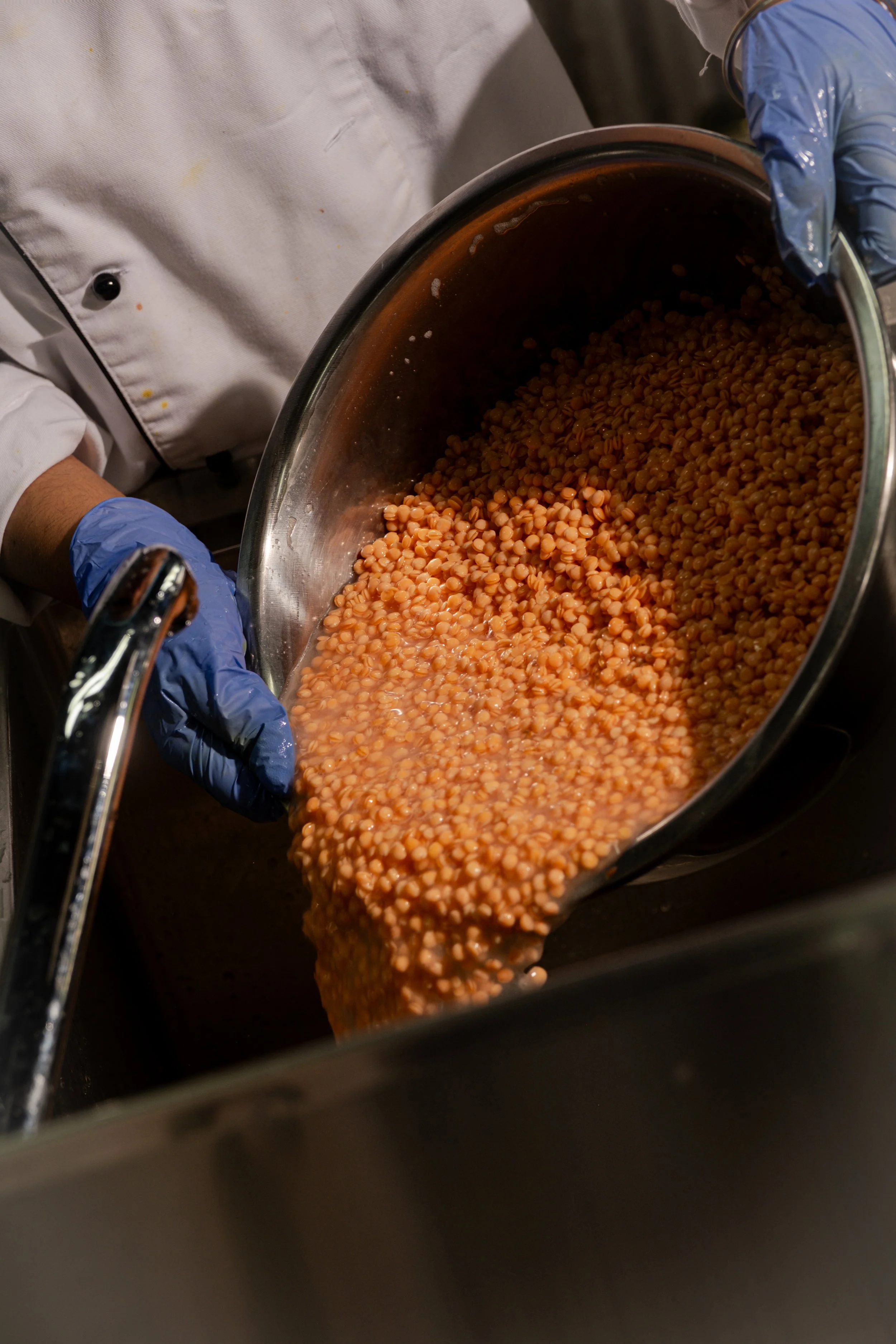
That's the point of the soak. Depending on the legume, the beans sit in water for anywhere from four to twenty-four hours, and the water is changed a few times along the way. Each change takes away what's been released so more can come out. If you leave the same water sitting there, you risk the beans going off.
A rinse isn't a soak
Most people, if they soak lentils at all, give them a rinse and leave them in a bowl for half an hour.
Removing phytic acid takes time and fresh water, and half an hour in the same water doesn't achieve much. The bean has barely started absorbing water by then, let alone releasing anything into it.
The same is true of oligosaccharides, the complex sugars behind gas and bloating. They're water soluble as well, so they leach out into the soaking water too, but that takes a few hours rather than thirty minutes.
A proper activation runs anywhere from four hours to a full day depending on the legume, with the water changed a few times along the way. That's a completely different process from a quick soak.
It's also why very few people do it at home. You have to plan ahead, keep the beans somewhere cool and remember to come back and change the water. Miss a change and the whole batch can spoil.
The other side of the argument
Not everyone agrees this matters as much as the wellness world suggests, and I think that's worth acknowledging.
Phytic acid has benefits of its own. It acts as an antioxidant, and its ability to bind minerals has been studied for potentially useful effects too. Communities that eat a lot of whole grains and legumes, with plenty of phytic acid in their diet, generally have good health outcomes overall.
So my view isn't that phytic acid is bad. It's that high intakes, without any preparation, can reduce how much of certain minerals you absorb, and that matters most for people who don't have much margin to begin with.
Traditional cooking reached the same conclusion long before anyone measured it. Cultures that relied on legumes and grains almost always developed ways to prepare them first, whether by soaking, sprouting or fermenting. Nobody knew about phytic acid. They just knew it worked.
Why we do it this way
Every legume in a Gut Happy meal is activated before it's cooked. We don't do it for the marketing. We do it because it decides whether the nutrition on the label actually reaches you.
It takes time, it has to be watched, and now and then we lose a batch.
We think it's worth it. The alternative would be printing a number on the packet and hoping nobody asks what happens to it.
Activation means more of the iron, zinc and magnesium in the bean is available to your body.
Same bean. Same label. Considerably more of it actually reaching you.